


Case Studies Detail.
- Precise Surgery. Better Healing.
- Case Studies
- Ganglion Cyst Excision from the Wrist
A ganglion cyst is a soft, fluid-filled bump that usually develops at the back of the wrist or hand. It develops when fluid from a joint or from a sheath around a tendon leaks out and settles under the skin, resulting in a smooth, round lump.
Ganglion cysts are harmless and do not cause any serious health issues. They tend to occur in young adults, especially those who repetitively use their hands and wrists (e.g., garment workers, typists). They are typically not painful, but some patients feel some mild discomfort when they’re active or just want them removed for cosmetic purposes.
Call Us when you Need Help!
Ganglion Cyst Excision from the Wrist
Jannatul Ferdous
Female
27 Year Old
Ganglion Cyst- 2 Years
Md. KM Shohag
10 Days
Complete Excision — Full Recovery
৳6000≈
About Case
A 27-year-old female garment worker visited HealingSurg with a smooth, soft swelling on the back of her right wrist which had been present for about 2 years at the time of her visit. The swelling was not significantly bigger during this time and did not cause her any pain. Yet as a person who worked at a garment factory making repetitive hand and wrist movements on a daily basis, she had become worried about the lump and asked for definitive surgery for the removal of the lump.
Clinical examination confirmed the swelling as soft, cystic and transilluminant with no tenderness, which is entirely normal of a dorsal wrist ganglion cyst. No evidence of inflammation, neurovascular compromise or restriction of wrist mobility. On thorough evaluation the procedure and the risks were explained to the patient and he or she provided informed consent for the surgical removal under local anaesthetic.
Symptoms Encountered
The patient had the following history and clinical features:
Challenges And Treatments
All of the extensor tendons, the branches of the radial nerve and the dorsal wrist capsule surround a usual site for a ganglion cyst. The goal of surgery was to remove the cyst and the root stalk (most important step to prevent recurrence).
The operation was done under local anaesthetic while the patient was lying in a comfortable position with the wrist resting on a firm surface. Patients were treated carefully and communication kept with them throughout to ensure that the procedure was smooth and pain controlled.
Challenges Encountered
This was done using the ganglion as the guide and the ganglion was excised down to its root stalk; this necessitated deeper dissection into the wrist capsule which caused moderate discomfort for the patient at this stage despite local anaesthesia.
Brief Procedure
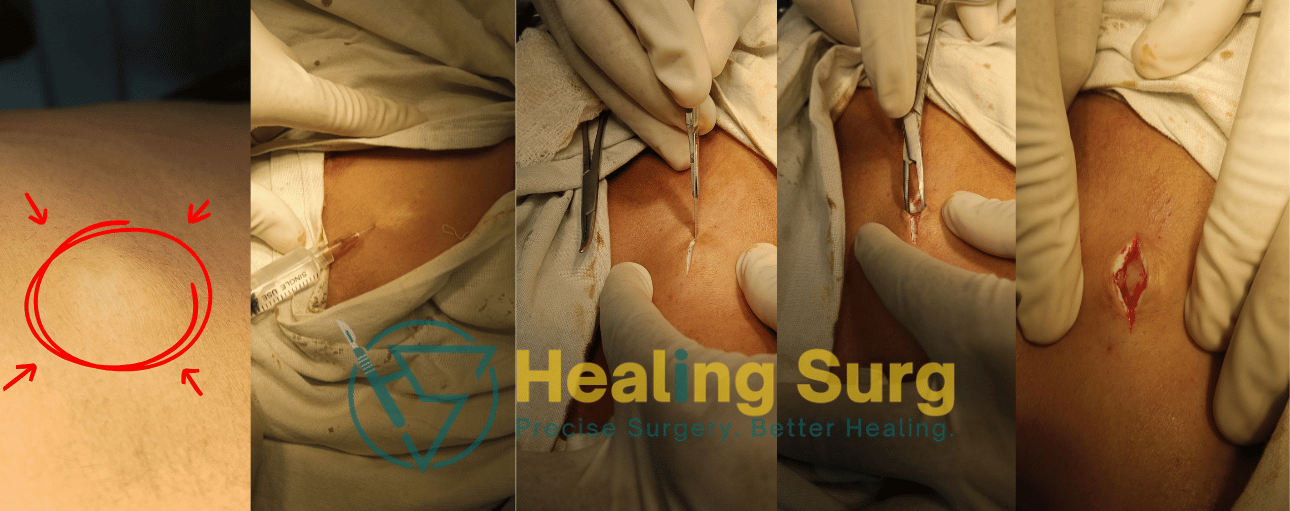
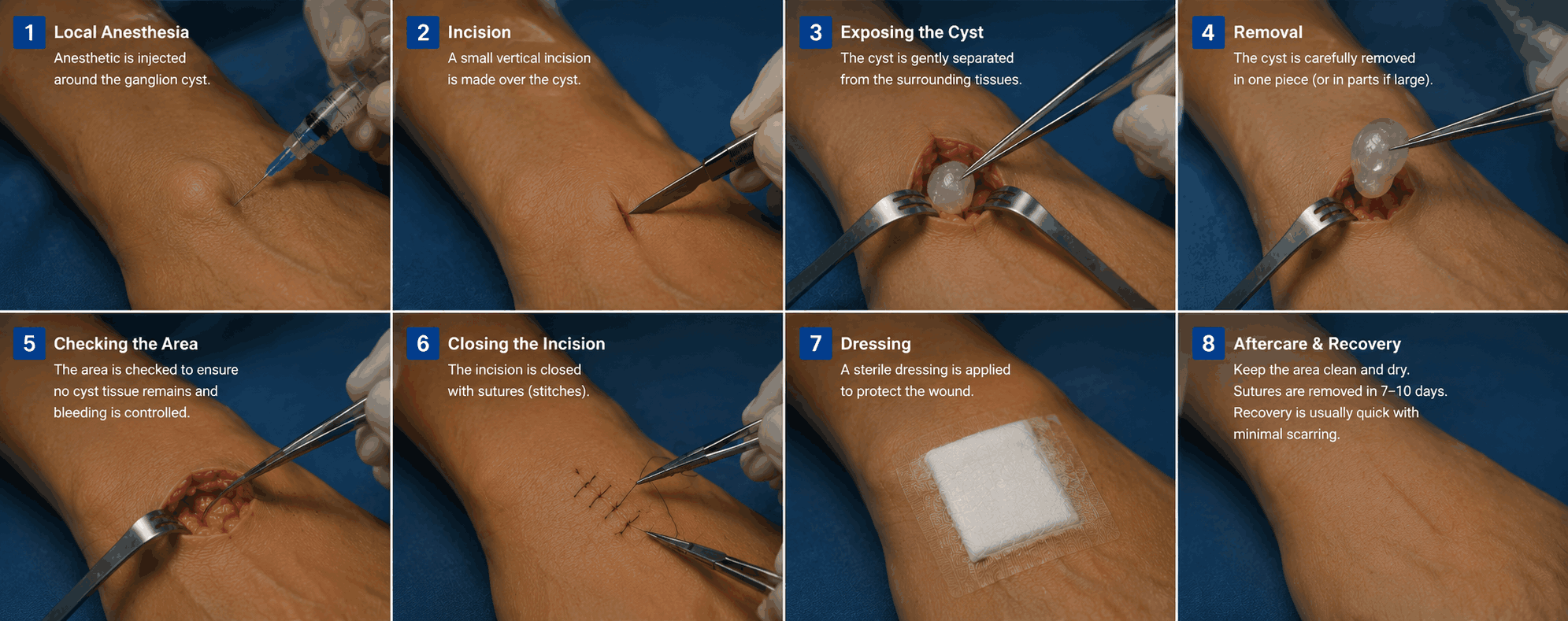
Local anaesthetic around the area where the procedure is going to take place to ensure a painless and comfortable experience. A well made 2cm transverse cut over the ganglion on the back of the wrist. Careful sharp and blunt dissection carried out to identify and isolate the ganglion cyst from surrounding extensor tendons and soft tissue.
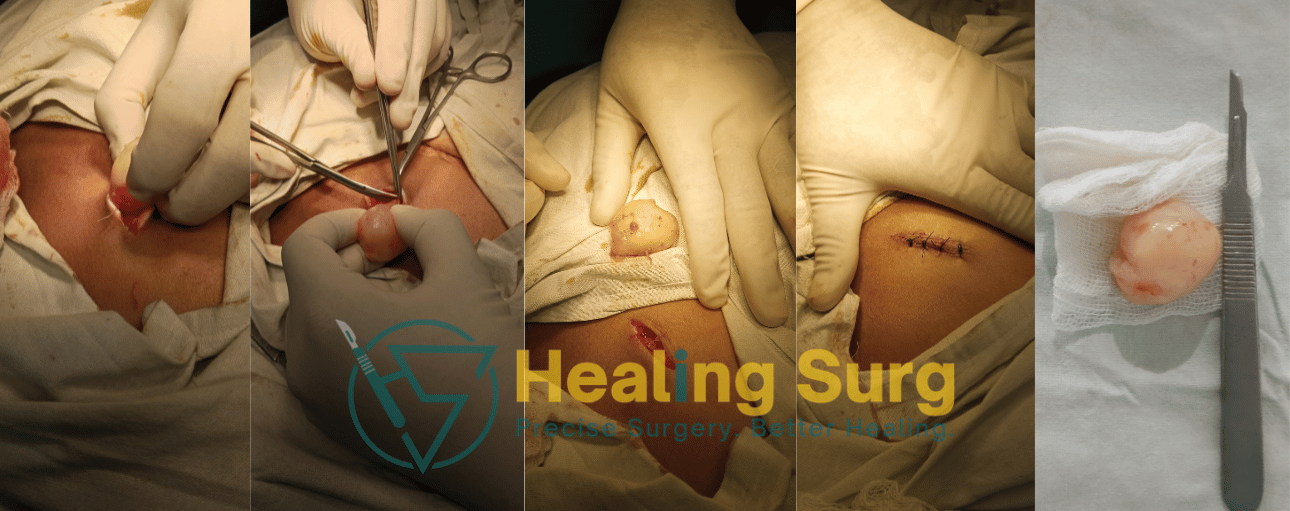
Dissection was carried further in order to locate and remove the root stalk at its base in the wrist capsule, which is the most important to avoid reoccurrence.
At this stage, the patient felt slightly unwell due to spread of dissection to the root where the situation was quickly managed with reassurance and additional local anaesthetic.
The ganglion was removed altogether and its connecting root was also cut. Haemostasis has been achieved wound was closed with 3 vertical mattress sutures for secure and eversion promoting closure. Sterile dressing applied and wrist supported post operatively.
Treatment Results
It was done successfully with local anaesthetic and there were no significant intra-operative complications. The ganglion cyst was excised totally, with its root stalk, and thus the chance of recurrence was greatly decreased. The overall procedure was well-tolerated by the patient, and there were only minor discomforts during deep dissection at the root, which were quickly resolved.
Fourteen days of smooth post-operative recovery. The wound healed well, without any evidence of infection, separation, or neurovascular compromise. Follow up was obtained and the patient indicated that she returned to her normal daily work activities without any complaints.

